Skip to content

Working together

Science-to-Venture & Strategic Partnerships

Helping science- and technology-driven ventures turn exceptional ideas into companies that can scale beyond their founders.

Throughout my scientific career, I have worked repeatedly at the point where cutting-edge research meets entrepreneurship. At CISPA, this meant helping create an ecosystem from which more than 35 technology ventures emerged, while working closely with founders, investors, industry partners and researchers on the transition from scientific idea to viable company.

For many young technology companies, the hardest transition comes after the original idea has proven its value. What made the company successful in its earliest stage — exceptional founders, speed, improvisation and highly centralized decision-making — can become precisely what prevents it from growing. The challenge is to preserve the scientific and entrepreneurial edge while building the talent, structures, priorities and partnerships that allow the company to become substantially larger without turning into a slower and less ambitious version of itself.

This work is deliberately focused on small and mid-sized science- and technology-driven ventures with genuine ambition to scale. It is most useful when founders want to understand what they need to change before growth forces the issue: where to remain uncompromising, what to professionalize, which capabilities to build, which partnerships to pursue — and which seemingly attractive choices can leave an otherwise strong company permanently dependent on its founders.

While this is not a networking or introduction service, I can also draw on an extensive international network of founders, investors, technology leaders, researchers and institutional partners where that perspective can strengthen the work.

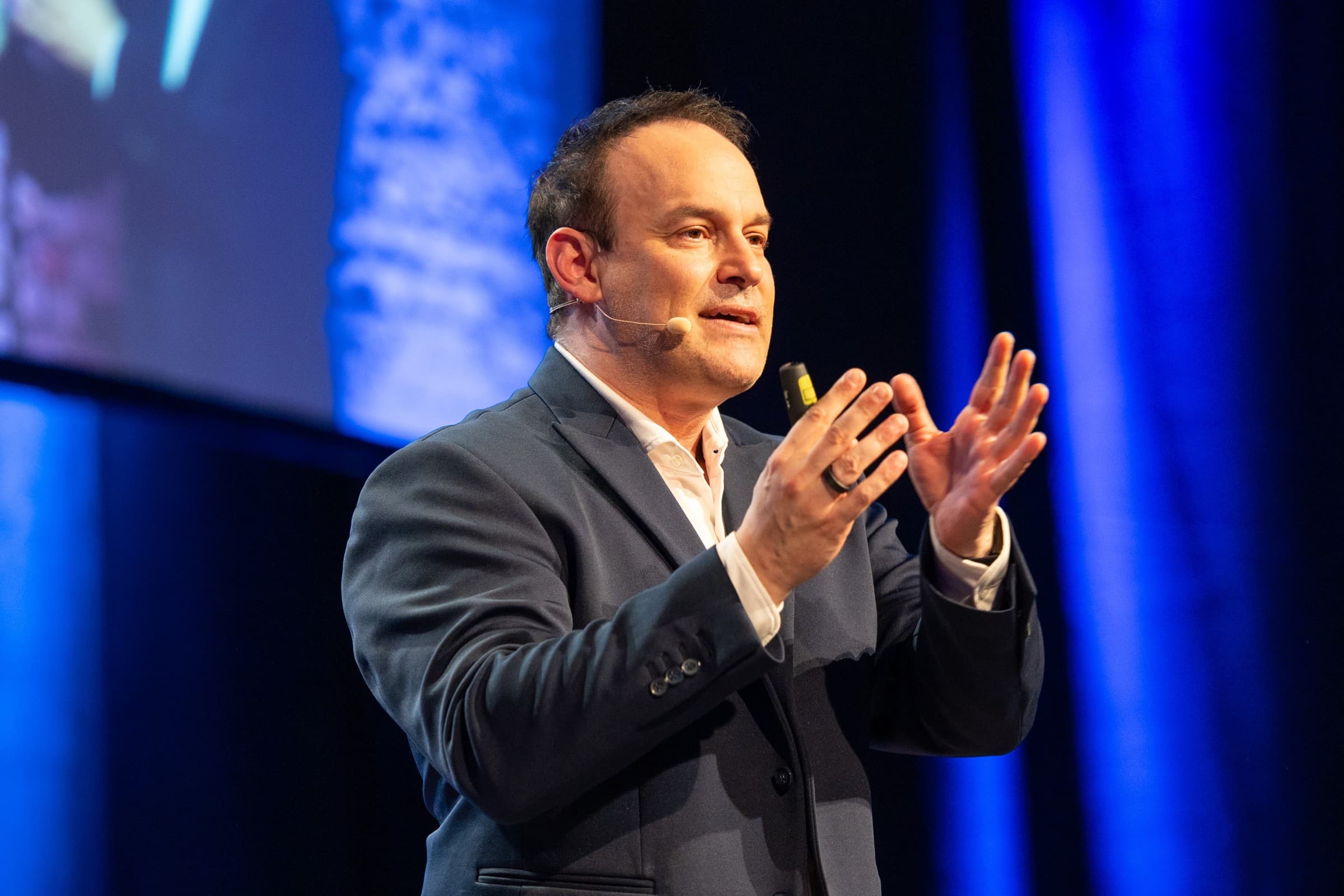
Michael Backes speaking at a lectern in front of a growth diagram
© Frank Leyendecker

Areas of engagement

01

Scaling Beyond the Founders

The qualities that make a science-driven start-up successful at the beginning can become its greatest constraint later. The decisive transition is learning what must remain founder-driven — and what has to become an organization.

Early-stage technology ventures often succeed because a very small number of exceptional people carry almost everything themselves: scientific vision, product judgement, hiring, customer relationships and the most important decisions. That intensity is a strength at the beginning. But if every important question continues to return to the founders, growth eventually amplifies dependency rather than capability.

I work with founders on the transition from an exceptional founder-led venture to an organization capable of scaling without losing what made it exceptional in the first place. That means deciding which responsibilities must move outward, where new leadership capability is needed, how to attract substantially stronger people, which structures should be introduced — and which should deliberately be resisted because they add bureaucracy before they add value.

This is not generic start-up coaching and not a playbook for professionalizing everything as quickly as possible. It is about identifying the few changes that allow a science- or technology-driven venture to grow beyond its founders while protecting speed, ambition, technical excellence and the ability to make unusually good decisions.

Typical questions may include

  • Which responsibilities still genuinely require the founders — and which have become founder dependencies that now limit the company's growth?
  • Which leadership capabilities and exceptional hires do we need next if the organization is to become substantially stronger rather than simply larger?
  • Which processes and structures will help us scale — and which would introduce complexity, slow decisions or dilute the entrepreneurial edge too early?
  • What must remain uncompromisingly part of the company's identity as we grow — and where do the founders themselves need to change for the next stage to become possible?
02

From Science to Market

Turning a scientific breakthrough into a successful company crucially requires understanding which part of the science creates real customer value — and then building around that without losing years perfecting what the market does not need.

Science-driven founders are often deeply attached to the technology they have created. That passion is essential, but it can also become a trap: teams continue improving scientific sophistication while gradually losing sight of the actual customer problem, the level of performance the market really requires, or the simplicity needed for adoption.

Throughout my career, I have seen many founders fall into precisely this trap and struggle to commercialize an initially strong idea. I have also seen ventures make the transition successfully by following a small number of fundamental principles: understanding what customers truly value, separating scientific differentiation from unnecessary complexity, knowing when further research creates real advantage, and building product and technology roadmaps around the same commercial objective.

I deliberately work with only a limited number of ventures, allowing me to become deeply engaged with each company's technology, internal dynamics and concrete needs rather than offering advice from a distance.

This is not generic startup coaching or standard business-angel advice. It is about identifying where scientific excellence can create a defensible market advantage — and avoiding the common mistake of building an increasingly impressive technology without building an increasingly valuable company.

Typical questions may include

  • Which part of our scientific or technological advantage will actually matter to customers — and which parts are primarily interesting to us as researchers or engineers?
  • What still has to change before our technology becomes sufficiently robust, scalable and usable for the market we want to enter?
  • Where should we continue pushing the research frontier — and where should we stop optimizing and turn what we already have into a product?
  • How do we preserve a genuine technological advantage while simplifying the solution enough to achieve adoption, scalability and commercial focus?
03

Strategic Partnerships

The right partnership can accelerate a young technology company by years. The wrong one can consume enormous attention, create dependencies and pull the company away from what actually makes it valuable.

For science- and technology-driven ventures, partnerships can provide capabilities that would be difficult or slow to build alone: access to customers, complementary technology, data, infrastructure, distribution, scientific expertise or credibility in a new market. But the existence of a potential partner does not make a partnership strategically useful. The decisive question is whether both sides create something together that materially strengthens the company's long-term position.

I work with founders to assess partnerships from that perspective: what each side genuinely contributes, whether incentives remain aligned over time, which dependencies are being created, what should remain proprietary, and whether the partnership accelerates the company's strategy or quietly begins to define it. Especially for smaller ventures, knowing when to decline an attractive-looking opportunity can be as important as securing the right one.

I can draw on an extensive international network across founders, investors, technology companies, research institutions and public-sector organizations where relevant to the work. The objective is not to act as an introduction service, but to use that perspective and network selectively when it can strengthen the company's options or help evaluate a potential path.

This is not partnership brokering and not about maximizing the number of collaborations. It is about identifying the few relationships that can genuinely accelerate the venture while protecting its independence, technological edge and long-term strategic value.

Typical questions may include

  • Which capabilities, market access or assets should we build ourselves — and where could the right partner accelerate us substantially?
  • What does each side genuinely contribute to this partnership, and are the incentives likely to remain aligned as the company grows?
  • Which technologies, data, intellectual property or strategic capabilities must remain under our own control even if sharing them would make a partnership easier today?
  • Which apparently attractive partnerships should we decline because they create dependency, consume focus or constrain more valuable options later?
04

Investor & Capital Strategy

For science-driven ventures, raising capital is not simply about getting enough money. The real challenge is finding capital that matches the company's technological path, ambitions and time horizon — without giving away strategic options too early.

Deep-tech companies often face a different financing logic from conventional startups. Scientific and technological milestones may take longer, commercial proof can emerge unevenly, and investors need to understand not only the size of the opportunity but also why the underlying technology creates an advantage that can endure. Raising the wrong capital, at the wrong time or against the wrong expectations can create pressure that ultimately weakens the company rather than accelerates it.

I work with founders on the strategic questions behind financing: which milestones should be reached before raising the next round, how technological progress and commercial traction should reinforce one another, what kind of investor is appropriate for the company's stage and ambition, and how to communicate the scientific advantage without either oversimplifying it or turning the investment case into a research presentation.

Where useful, I can also draw on my international network and experience with founders, investors and technology ecosystems to understand different perspectives around a financing decision. The objective is not simply to optimize the next round, but to make sure that capital strengthens the company's ability to pursue its long-term opportunity.

This is not fundraising brokerage and not investor matchmaking. It is strategic work on how, when and from whom a science-driven venture should raise capital — while preserving ambition, independence and the ability to make the right long-term decisions.

Typical questions may include

  • Which scientific, technological and commercial milestones should we reach before raising the next round — and which can reasonably come afterwards?
  • What type of investor best matches our stage, technological ambition and expected path to market?
  • How do we explain a genuinely complex scientific advantage in a way investors can understand without overselling what the technology can currently deliver?
  • Which financing choices or investor expectations could constrain strategically important options later — even if they make the next round easier today?
  • €900m+Mobilised & overseenMore than €900 million mobilised and overseen across scientific, technological and institutional development.
  • 35+Technology venturesMore than 35 technology ventures have emerged from the CISPA ecosystem, translating scientific and technological ideas into companies.
  • €30m+External early-stage financingRaised by startups from the CISPA ecosystem — capital committed by outside investors to companies that began as research.

Contact me

If any of this is close to a question you are actually facing, write. A few sentences about the situation are enough to tell whether I am the right person — and if I am not, I will say so.

← Working together