Skip to content

Working together

Strategic Advisory & Board Roles

Independent counsel on far-reaching decisions shaped by science, technology and long-term strategic direction.

I have spent more than two decades at the scientific frontier of cybersecurity, privacy and AI, producing a substantial body of work at the field's leading venues and initiating and shaping major research directions internationally. That scientific standing, combined with the ambition and leadership to build at scale, became the foundation for building one of the internationally leading research institutions in the field — growing it from an early-stage initiative into a Helmholtz Center with more than 750 people.

The most important strategic choices are often made before a technology becomes visible to the market. They begin with understanding where cutting-edge science is moving, which breakthroughs will change what becomes possible, and which will not. Organizations that develop that understanding early can position themselves around emerging capabilities and shape transformation before the rest of their industry is forced to react.

The work is deliberately selective. It is most valuable where leadership is prepared to look beyond market consensus, understand what science may make possible next, and turn that understanding into far-reaching strategic choices before others do.

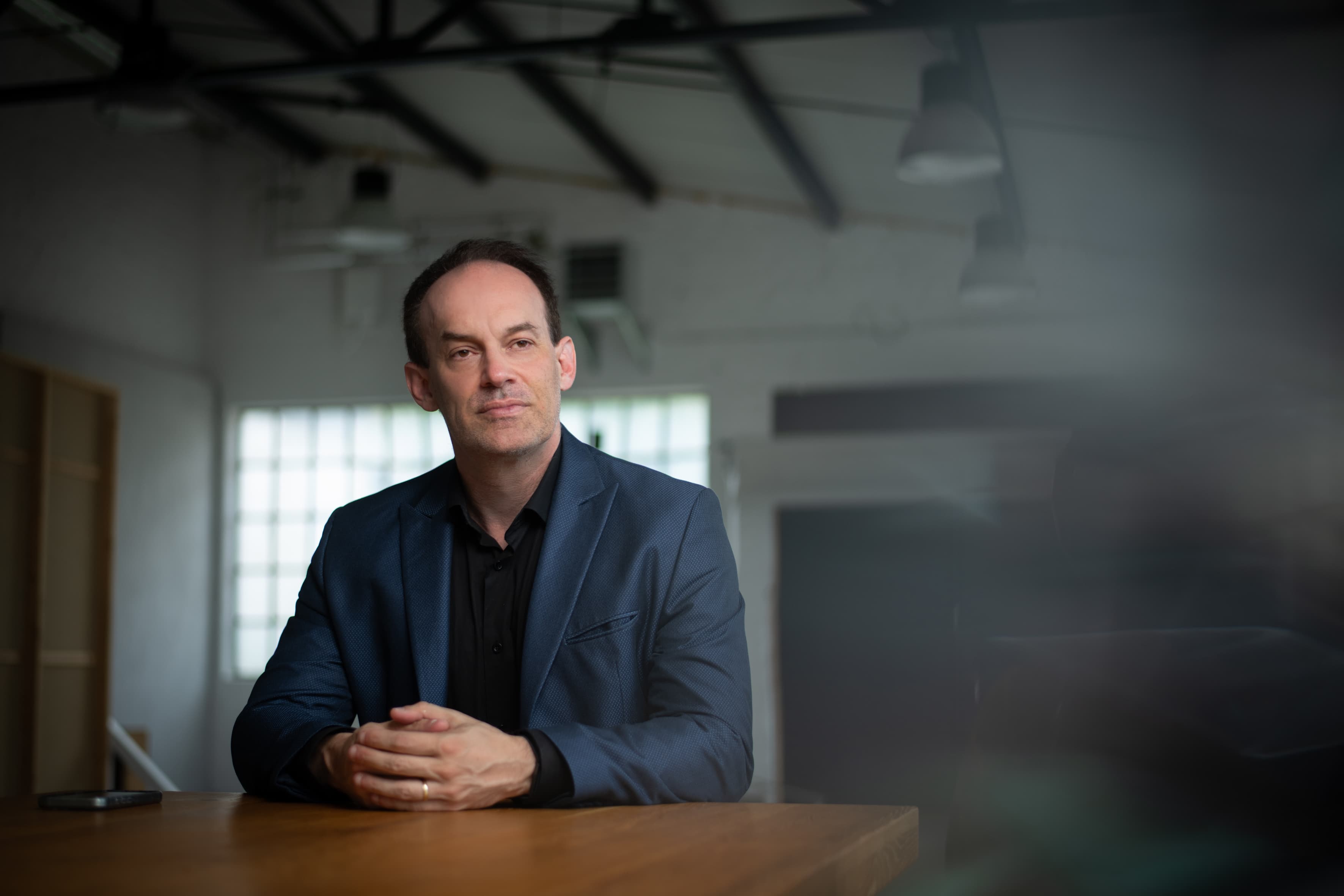
Michael Backes in conversation with a business leader across a conference table
© Jennifer Weyland

Areas of engagement

01

CEO & Board Advisory

Strategic advantage rarely comes from recognizing a technology once the market already starts to adopt it. For boards, it comes from seeing, directly in cutting-edge science, what will become possible and feasible — and what is likely to become market-ready — before others do.

I work directly with CEOs and boards to give them access to scientific insights that can reinforce, redirect or fundamentally reshape long-term strategic direction — well before conventional market analysis can reveal the same options.

The work starts with deep insight into cutting-edge science: understanding the magnitude of advances and their limitations, what new capabilities they may enable, under which assumptions and at what levels of performance, where scalability or economics may constrain them, and which developments are likely to become broadly applicable. From there, the question becomes strategic: what should an organization prepare for, invest in, build, partner around — or deliberately ignore — before the rest of the market reaches the same conclusion?

This is not technology forecasting from headlines or analyst reports, and it is not day-to-day implementation. It is deep scientific assessment translated into a forward-looking view of capabilities, opportunities, limitations and risks — and ultimately into decisions at CEO and board level.

Typical questions may include

  • Which scientific breakthroughs are likely to fundamentally reshape what becomes possible in our field — and what could they enable organizations like ours to do that is not possible today?
  • Which emerging capabilities could create entirely new strategic options for us — and what would we need to build, acquire or partner on now to benefit before our competitors do?
  • Which current technology promises are supported by the underlying science, which rely on unrealistic assumptions about performance or market scalability, and where are we at risk of mistaking hype for durable capability?
  • Where will increasingly general-purpose technologies become widely available, where will specialized solutions retain a decisive advantage — and what should that mean for our long-term positioning?
02

Cybersecurity & AI Deep Dives

The value of a deep dive is not in overwhelming decision-makers with technical detail. It is in understanding a technology profoundly enough to see how it fundamentally works — and to independently assess what it can really do, where its limits lie, and where it is likely to develop next.

Cybersecurity and AI are often publicly discussed in simplified categories — models, agents, platforms, zero trust, automation, resilience. A deep dive goes beneath those labels. It examines how the underlying systems actually work, which assumptions their capabilities depend on, where their technical limits lie, and how current research may change those boundaries.

Throughout my scientific career, the focus has not only been on producing cutting-edge research, but also on taking it beyond publication — towards systems and solutions that have to work in practice. That experience makes it possible to connect scientific progress with the realities of deployment: performance, security, data, architecture, scalability, economics and the gap that often exists between a compelling research result and a robust real-world capability.

This is not an executive technology overview or a trend presentation. It is a tailored scientific and technical deep dive designed to give CEOs and boards a sufficiently profound understanding to challenge assumptions, ask better questions and assess opportunities, limitations and future developments independently.

Typical questions may include

  • How do cutting-edge cybersecurity and AI technologies fundamentally work — and which assumptions determine what they can and cannot do?
  • Which breakthroughs in cybersecurity and AI could change what is technically possible over the next few years — and which limitations are likely to remain?
  • What has to happen between a strong research result and a technology that can operate securely, economically and reliably at scale?
  • Where are general-purpose approaches likely to dominate, and where will specialized architectures, data or security solutions continue to matter?
03

Scientific Strategy & Research Excellence

Scientific excellence depends as much on knowing what not to compromise as on knowing what to pursue. The hardest decisions are often the ones that require saying no — even when there are good reasons to say yes.

This work is deliberately specialized. It is for research institutions and science-driven organizations whose long-term success depends on the quality, originality and direction of their research — and where decisions about scientific priorities, structures and major investments shape what the organization can become over many years.

Building CISPA from an early-stage initiative into one of the internationally leading research institutions in its field, with more than 750 people, required repeatedly deciding what conditions outstanding researchers need to do their best work, where standards must remain uncompromising, and which opportunities genuinely strengthen an institution. Equally important was learning what not to compromise: scientific excellence in response to external expectations, academic freedom and individual development through overly restrictive structures, or the quality of collaborations and partnerships simply because an opportunity was available. Building excellence also means developing a deep understanding of when to say no — and then having the discipline to act accordingly.

This work distills the knowledge and lessons accumulated through that entire building journey — including decisions that worked, decisions that had consequences, and principles that proved worth defending — and applies them to the institution at hand: what to build, what to protect, where to focus, which opportunities to pursue, and which compromises to refuse.

Typical questions may include

  • Where must we protect scientific excellence from pressures that would gradually lower the standard we are trying to build?
  • Which collaborations, partnerships or institutional opportunities genuinely strengthen our scientific mission — and which should we be prepared to decline?
  • Which structures give outstanding researchers the freedom and responsibility to develop — and which risk constraining precisely the people we most want to attract and retain?
  • Which recurring pitfalls in building high-performing research organizations should we recognize early — before they become embedded in structures, incentives or culture?
04

Strategic Science & Technology Assessment

When a major decision rests on a claim in cybersecurity, AI or adjacent deep tech, the critical question is not how compelling the opportunity sounds — but what the underlying science actually supports, where its limits lie, and what would have to become true for the promise to hold.

I provide independent scientific and technological assessments primarily in cybersecurity, as well as in AI and closely related deep-tech fields where my own research background allows me to go substantially beneath the surface. The aim is to establish what has genuinely been demonstrated, which capabilities can reasonably be expected, what remains extrapolation, and which technical assumptions or limitations could determine whether an opportunity ultimately succeeds.

No single researcher can judge every field at that depth, and I do not claim to. Where a question reaches beyond my own, I draw on a network built over two decades at the scientific frontier: the people who lead the relevant field internationally, whom I can ask directly — and whose answers I am able to weigh.

The assessment goes back to the underlying research: the mechanisms, evidence, architectures and assumptions behind a claim; how they compare with the state of the field; and what still has to happen before a scientific advance becomes a robust, secure, scalable and economically meaningful capability. Particularly in cybersecurity, this often means examining not only whether something works, but under which threat model, against which adversary, with which dependencies — and where a seemingly strong result may cease to hold.

This is not conventional commercial due diligence, nor is it a generic scientific review across arbitrary fields. It is an independent assessment grounded in deep domain expertise — designed to make clear what is established, what is plausible, what remains uncertain, and which scientific or technological risks and opportunities should matter for the decision at hand.

Typical questions may include

  • What has this cybersecurity or AI technology actually demonstrated — and which parts of the wider promise are still assumptions or extrapolations?
  • Under which technical assumptions, threat models or operating conditions does the claimed capability hold — and where does it begin to break down?
  • Is the apparent technological advantage fundamental and defensible, or is it likely to disappear as the underlying technology matures and becomes more widely available?
  • Which scientific or technological milestones would have to be reached before we should change our assessment or commit to the opportunity?
  • 400+Scientific publicationsPublished across cybersecurity, privacy and AI, with an extensive record at the field's leading scientific venues.
  • €1m → Helmholtz CenterFounding DirectorBuilt CISPA from an early-stage research initiative into a full-fledged Helmholtz Center for Information Security.
  • €900m+Mobilised for science & institution buildingSecured and mobilised for long-term scientific, technological and institutional development.
  • #1 worldwideCybersecurity & cryptographyCISPA has ranked first worldwide in cybersecurity and cryptography in CSRankings continuously since 2020.

Contact me

If any of this is close to a question you are actually facing, write. A few sentences about the situation are enough to tell whether I am the right person — and if I am not, I will say so.

← Working together