Skip to content

01 · About

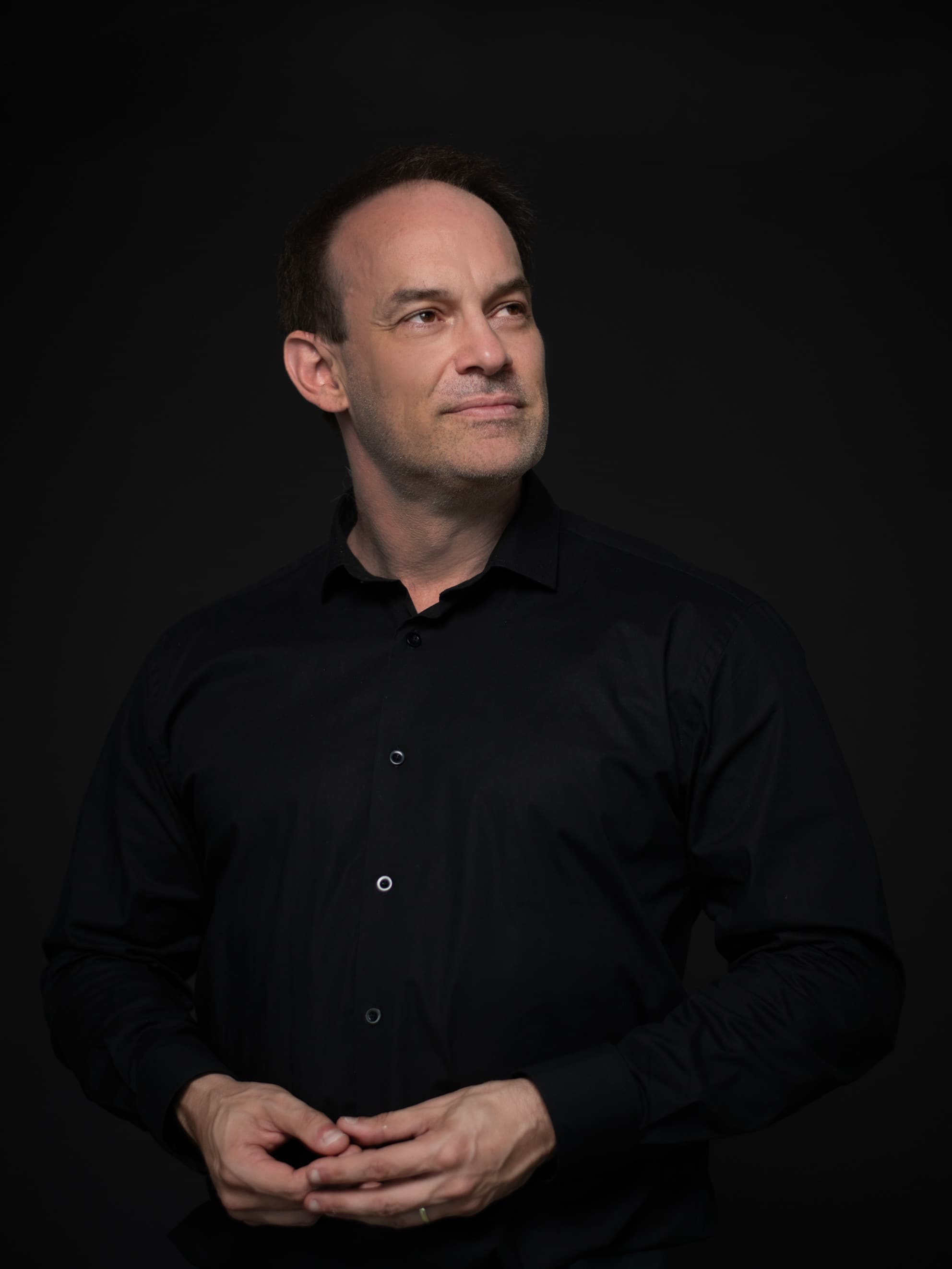
Michael Backes
© Jennifer Weyland

Founding Director

Building institutions from scratch to world leadership.

Michael Backes is the Founding Director and Spiritus Rector — the intellectual driving force — behind the CISPA Helmholtz Center for Information Security, an institution he built from a small, federally funded research center with an annual budget of roughly €1 million into one of the world’s leading research institutions in cybersecurity.

The CISPA story was never the execution of a predefined institutional plan.

From a competence centre to a Helmholtz institution

01

A Small Federally Funded Competence Center

Where it began — and how little the beginning implied.

When CISPA started in 2011 as a federally funded competence center for IT security and privacy, there was no predetermined path toward any permanent or independently institutionalized research center — let alone an independent Helmholtz Center, one of the most substantial institutional forms available within Germany’s public research system.

The original mandate was limited.

The ambition was not.

Backes envisioned something fundamentally larger: a permanent, internationally competitive institution dedicated to cybersecurity, capable of competing scientifically with the strongest universities and research laboratories in the world and of attracting exceptional scientists from around the globe.

02

Vision Before Mandate

Six years of building the conditions for an institution nobody had yet agreed to create — the stage that decides all the others, and the only one with no validation from outside while it lasts.

For six years, this was a vision without an institutional guarantee.

There was no entitlement to a permanent center. No assurance that the political system would ultimately support it. No guaranteed return on the enormous additional effort required to build toward something that formally did not yet exist.

Backes and the early team nevertheless kept building.

They worked far beyond what the existing institutional framework required, went enormous extra miles and accepted substantial professional and personal risk — without certainty that the effort would ever be recognized or pay off.

The principle was simple:

Build the institution before the institution formally exists.

  • Create the science.
  • Recruit the people.
  • Establish international credibility.
  • Build the organizational structures.
  • Mobilize political support.
  • Secure resources.
  • Prove that an institution based in Saarland could compete at the scientific world frontier.

And keep going, irrespective of how improbable the final goal might initially appear.

Over those six years, what began as an ambitious idea became increasingly credible — scientifically, institutionally and politically.

03

An Independent Helmholtz Center

2017. The vision acquires a legal form.

In 2017, the vision became reality.

The CISPA Helmholtz Center for Information Security was established as an independent Helmholtz Center, with Michael Backes as its Founding Director.

04

Global Scientific Leadership

Recruiting against the strongest universities and technology companies in the world — and then being measured by a ranking nobody involved controls.

But institutionalization was not the finish line.

It was the starting point for the next phase.

The objective remained uncompromising: to build a world-class institution at scale.

More than 50 international faculty were recruited into an institution competing directly with leading universities, research centers and global technology companies for scientific talent.

The organization grew to more than 750 employees.

Its researchers have produced more than 1,300 conference papers, including more than 700 papers at the absolute top conferences of their respective fields, and have secured 18 ERC Grants.

CISPA ultimately reached the very position that had seemed extraordinarily ambitious at its beginning: according to CSRankings, it became the internationally leading institution in computer security.

05

An Institution at Scale

Scale was the consequence of the standard, not the goal that replaced it.

What had started with roughly €1 million in annual funding had become a national Big Science institution with hundreds of employees, internationally leading research, major research infrastructure and hundreds of millions of euros in resources acquired and overseen during its development.

And the vision continued to expand.

CISPA was no longer conceived merely as a research center.

It became the nucleus of a much broader ambition: combining world-class science, international talent, education, technology transfer, entrepreneurship, venture creation and large-scale infrastructure into an ecosystem capable of shaping the technological and economic future of an entire region.

The institution became one of the defining scientific and technological flagships of Saarland — and an anchor for a vision of the region’s future built around knowledge, technology and exceptional talent.

06

Beyond Research

An institution that produces science alone has done half the work.

This is why the CISPA story is not primarily a story of organizational management.

It is a story of institutional entrepreneurship.

It demonstrates the ability to see an institution before it exists, pursue it before there is a mandate, accept the risk of failure, assemble the scientific, human, financial and political prerequisites required to make it possible — and then scale it to the international frontier.

  • 750+Employees at CISPASeptember 2026
  • 50+Faculty recruited to CISPASeptember 2026
  • 1,300+Conference publications at CISPAJanuary 2018 – September 2026
  • 700+Papers at the absolute top conferences of their fieldsJanuary 2018 – September 2026
  • 18ERC Grants
  • €900m+Mobilised & overseenResearch funding, institutional financing and strategic investment
  • #1 worldwideComputer Security & CryptographyIn CSRankings continuously since 2020
  • €1M → Big ScienceFrom an initial small-scale federally funded center to a permanent national research institution

Contact me

If any of this is close to a question you are actually facing, write. A few sentences about the situation are enough to tell whether I am the right person — and if I am not, I will say so.

← All five roles