Skip to content

03 · About

Michael Backes
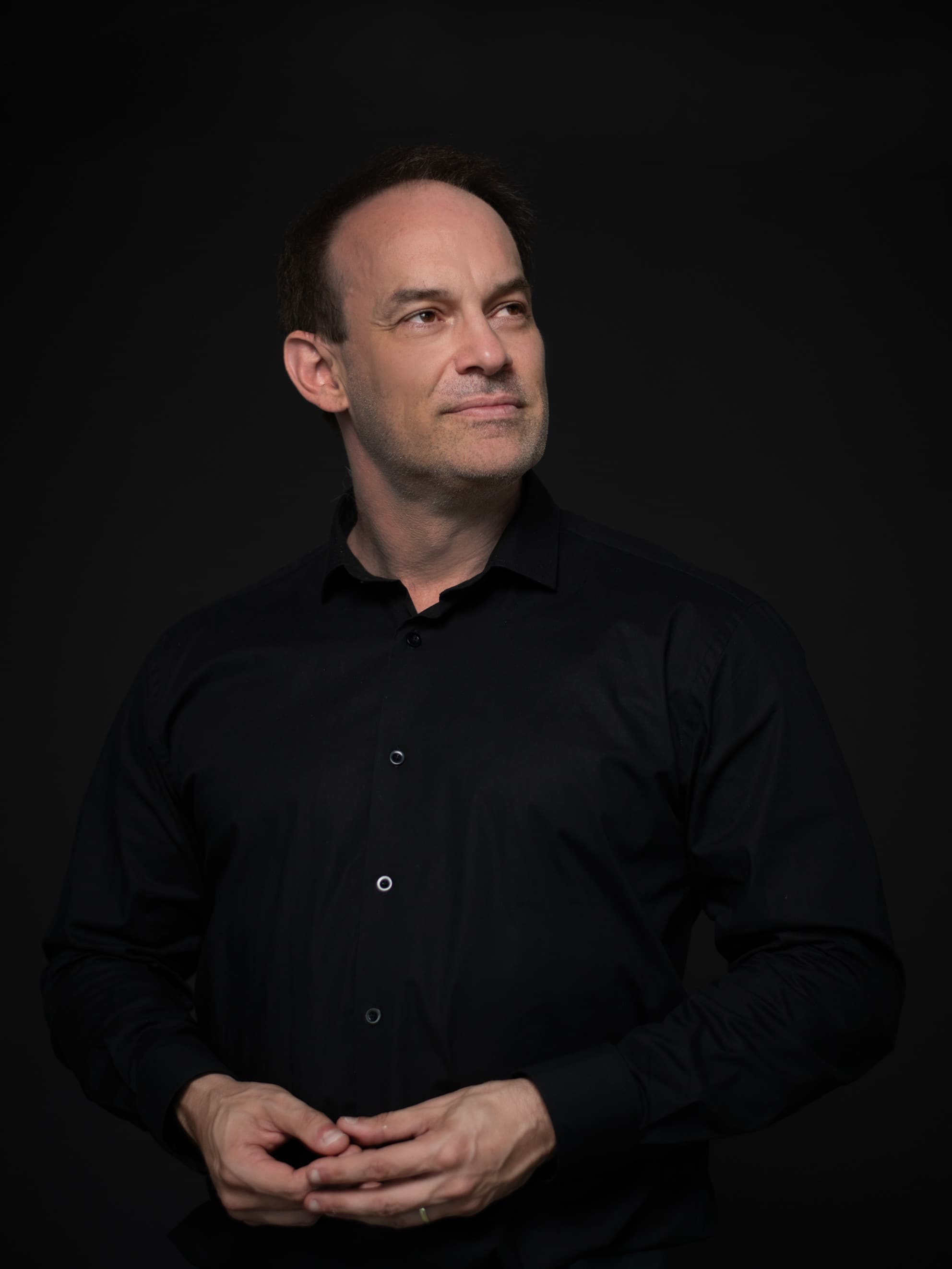
© Jennifer Weyland

Talent Magnet

Exceptional institutions are built around exceptional people.

Michael Backes has spent more than two decades identifying, attracting, mentoring and developing outstanding scientific talent.

For him, talent has never been an administrative function or a conventional recruiting exercise. It has been one of the central strategic foundations of scientific excellence.

His record spans the entire academic talent lifecycle: from teaching and mentoring students at the beginning of their careers, to developing young researchers into independent scientific leaders, to recruiting internationally outstanding faculty, and ultimately to creating degree programs and institutional environments designed around the next generation of scientists.

From individual mentorship to a talent architecture

01

An Academic School

The measure of mentoring is where the people end up, not how many were supervised.

Perhaps the strongest measure of this impact is what happened to the people themselves.

Today, 31 former members of Michael Backes’s own research group have gone on to faculty or professorial positions at recognized universities and research institutions around the world.

They include researchers who later joined institutions such as Purdue University, University of Waterloo, RWTH Aachen, TU Vienna, University of Amsterdam, University of Birmingham, University of Lausanne, Zhejiang University, IMDEA and CISPA itself.

He built an academic school that has produced a new generation of scientific leaders in cybersecurity.

This is more than successful supervision.

It is the multiplication of scientific leadership.

02

Recruiting in the Hardest Market

Compensation is the part every institution can match. The rest is what actually decides it.

At the same time, Backes became one of the driving forces behind an unusually ambitious international faculty recruitment effort.

At CISPA, he helped attract more than 50 international faculty in one of the world’s most competitive scientific labor markets. Many joined at formative stages of their careers while having opportunities at other leading academic institutions.

Attracting such people requires much more than competitive compensation.

Exceptional scientists choose environments.

  • They choose ambition.
  • They choose intellectual freedom.
  • They choose colleagues.
  • They choose the possibility of building something that does not yet exist.
  • And they choose leaders whom they believe can create that environment.
03

Building the Structures That Did Not Exist

Three degree programmes, created because no existing one did the job.

Backes’s approach to talent therefore extended far beyond individual recruitment.

He repeatedly helped create new structures when existing ones were insufficient.

In 2014, he founded a dedicated Bachelor’s program in Cybersecurity at Saarland University, combining cybersecurity with a rigorous computer-science education from the first semester.

He subsequently established an internationally oriented Master’s program in Security & Privacy, which later evolved into a permanent Master’s program in Cybersecurity.

He also co-created a dedicated Master’s program in Entrepreneurial Cybersecurity, combining advanced cybersecurity education with entrepreneurship and venture creation.

04

A Talent Architecture

Not a sequence of good appointments. A system that produces the next generation and keeps producing it.

Beyond formal degree programs, major scientific initiatives that Backes initiated or helped build — including CISPA, a DFG Collaborative Research Center, two Clusters of Excellence and major ERC-funded research programs — created funded research and training opportunities for hundreds of young scientists.

The scale therefore reaches far beyond the members of one research group.

It represents a sustained effort to build an entire talent architecture around cybersecurity and computer science: identifying exceptional potential, developing it, attracting it internationally and creating institutions in which it can flourish.

  • 31Former research-group members who went on to faculty or professorial positions worldwideAs of October 2026
  • 50+Faculty recruited to CISPASeptember 2026
  • 100+Bachelor's and Master's students directly supervised
  • HundredsOf young scientists supported through research programs, centers and large-scale scientific initiatives
  • 80+University lectures and seminars taught

Contact me

If any of this is close to a question you are actually facing, write. A few sentences about the situation are enough to tell whether I am the right person — and if I am not, I will say so.

← All five roles