Skip to content

04 · About

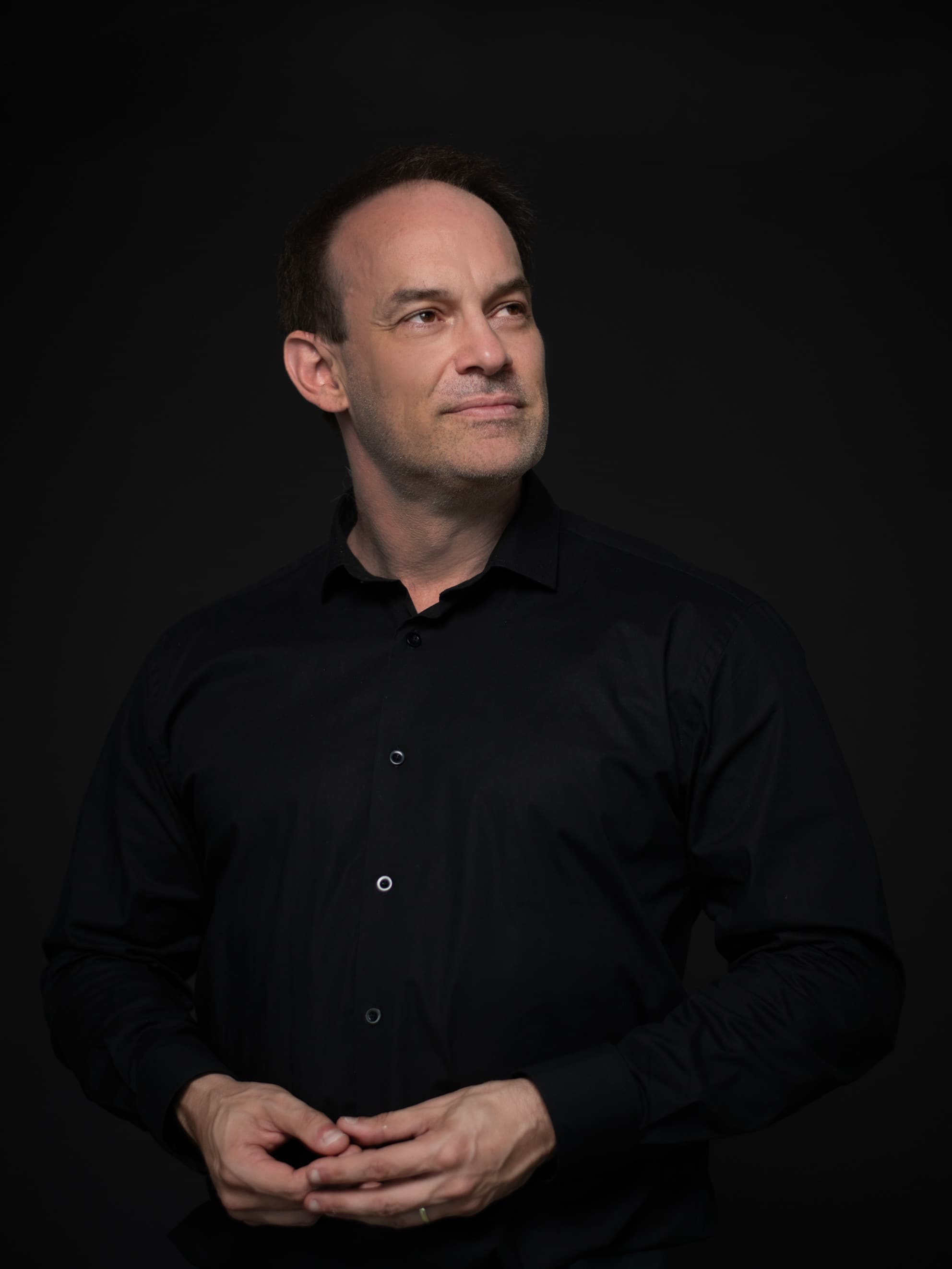
Michael Backes
© Jennifer Weyland

Technology Strategist

From scientific foresight to technology, companies and economic transformation.

Michael Backes has spent more than two decades at the intersection of frontier research, emerging technology and long-term strategic transformation.

His perspective on technology is rooted in scientific depth. He does not approach AI and cybersecurity primarily from market trends, consulting frameworks or short-term technology cycles, but from a fundamental understanding of how technologies work, where their limitations lie and which scientific developments have the potential to become structurally important.

Across his career, Backes has repeatedly moved early into technological fields that later became central to industry and society. His work has ranged from cryptography and formal verification to privacy-enhancing technologies, systems and mobile security, machine-learning privacy and security, trustworthy AI and, most recently, the security of generative AI and large language models.

From frontier research to a technology region

01

From Research to Working Technology

Scientific understanding becoming technology that is actually deployed — repeatedly, and by pattern rather than by chance.

This scientific foundation has repeatedly translated into practical technology.

His career began at IBM Research Zurich, connecting fundamental research with industrial application from an early stage. Research conducted by Backes and his teams subsequently led to patents, deployed security technologies, open-source systems, research spin-offs and technologies adopted far beyond the academic community.

Among these examples is AppGuard, a mobile-security technology originating from research in his environment that achieved widespread practical deployment. His work on privacy-preserving distributed learning contributed to Swarm Learning, a new decentralized machine-learning paradigm featured on the cover of *Nature*. More recently, his research has addressed emerging security challenges around generative AI, including prompt attacks, jailbreaks, privacy leakage and the trustworthiness of large language models.

The common pattern is the ability to move from scientific understanding to technological relevance — and then to ask what the next implications will be for companies, institutions and society.

02

From Technology to Economic Strategy

Not technology transfer, in which an invention occasionally leaves a research institution. A system built so that it happens repeatedly.

Over time, this perspective expanded beyond individual technologies.

At CISPA, Michael Backes helped build an environment in which world-class research could systematically become technologies, products and companies.

The ambition was not conventional technology transfer, in which individual inventions occasionally leave a research institution. The objective was to create a broader system in which science, talent, entrepreneurship, capital and economic development reinforce one another.

Dedicated structures for technology transfer and entrepreneurship were developed, researchers and students were given pathways toward company creation, and a growing network of founders, investors and technology partners emerged around CISPA.

More than 35 startups have been supported within this ecosystem.

In recent years, startups originating from or supported by the CISPA environment have attracted more than €30 million in external early-stage financing and funding, providing evidence that scientific ideas from the research environment can develop into companies capable of attracting serious external capital.

The strategic objective was never simply to maximize the number of startups.

It was to create the conditions under which excellent science could repeatedly generate technologies and companies rather than producing isolated success stories by accident.

03

Building an Innovation Ecosystem

No single institution creates a technology region. The strategy had to be larger than CISPA.

This broader vision was articulated early through the idea of a “Saar Valley” — an internationally visible technology ecosystem built around world-class computer science and cybersecurity research.

The concept rested on a simple observation: the most successful technology regions are not created by any single institution. They emerge when exceptional science, talent, entrepreneurs, companies, capital and infrastructure become sufficiently concentrated to reinforce one another.

Backes therefore increasingly approached technology strategy as ecosystem strategy.

Scientific excellence would attract international talent. Exceptional talent would produce new technologies. Those technologies could create founders and companies. Successful companies would attract capital, industrial partners and further talent. Over time, the resulting density could become an economic force in its own right.

The Innovation and Venture Campus concept in St. Ingbert was part of this larger ambition: creating a physical environment in which researchers, founders, investors and technology companies could interact repeatedly and at scale.

The goal was not simply to provide offices for startups, but to create the physical and institutional conditions from which a deep-tech ecosystem could compound.

04

Technology as a Driver of Regional Transformation

Excellence that stays inside the laboratory has not yet done anything.

Backes’s commitment to this broader regional future has extended beyond CISPA itself.

He serves as Spokesperson for the Saarland Ambassadors, representing a network dedicated to strengthening the visibility, reputation and long-term development of the region.

He was also named Honorary Citizen and Future Ambassador of the City of St. Ingbert, recognizing his contribution and his broader vision of science and technology as drivers of regional transformation.

Together, these roles reflect a conviction that technological excellence should not remain isolated inside laboratories or institutions. Its greatest impact comes when it expands what becomes possible for companies, people and entire regions.

  • 25+ yearsAt the frontier of cybersecurity, privacy and AI research
  • €900m+Mobilised & overseenResearch funding, institutional financing and strategic investment
  • 35+Technology venturesFrom the CISPA environment, during his tenure
  • €30m+External early-stage financingRaised by startups from the CISPA ecosystem
  • IBM ResearchEarly industrial research experience at IBM Research Zurich
  • Saarland AmbassadorsSpokesperson for the Saarland Ambassadors
  • Future AmbassadorHonorary Citizen and Future Ambassador of St. Ingbert

Contact me

If any of this is close to a question you are actually facing, write. A few sentences about the situation are enough to tell whether I am the right person — and if I am not, I will say so.

← All five roles